Jamie Toney: Why I Chose the Dental Therapy Profession

Choosing a career is one of the biggest decisions we face, and for me, dental therapy felt like the right choice. My interest in dentistry comes from personal experiences, a love for oral health, and a strong desire to help people. I also have a clear understanding of what this role involves and the opportunities it offers.

My journey into dental therapy began during high school when I worked as a co-op student at Dr. Richard Golden’s dental office, which was conveniently located near my school. This experience was truly life-changing. The warm and friendly environment, along with the dedicated dental professionals I worked with, made me feel at home. I remember my supervisor, Debbie McCoy, who took the time to connect with me, even though I was just 14 and eager to learn. She encouraged my curiosity and impressed upon me the importance of understanding all parts of a dental office, which helped me grow.

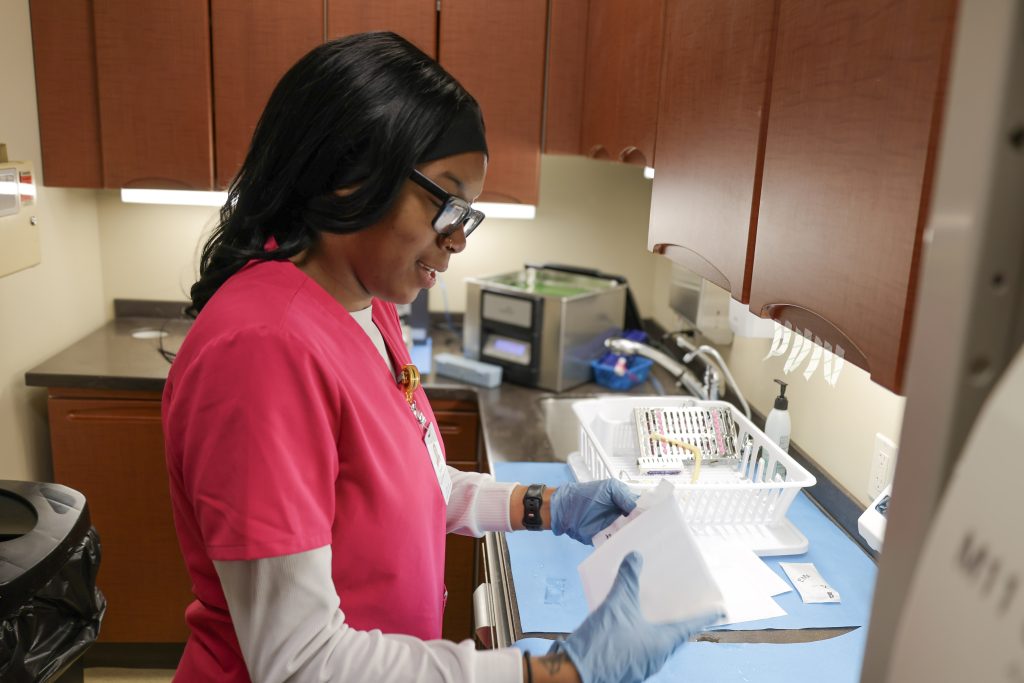
As I transitioned from a co-op student to a dental assistant, I began to appreciate the responsibilities that came with each new role. My decision to pursue dental therapy became even clearer while working at a health center in Detroit. There, I noticed how many people in underserved communities struggled to access dental care, especially during and after the pandemic. I learned that factors like low insurance reimbursements and transportation issues contribute to this problem, resulting in poor oral health for many individuals. Understanding this inspired me to be part of the solution. Dental therapists can play a crucial role by collaborating with dental teams to ensure that patients receive the quality care they need, which can improve the health of the entire community.

My enthusiasm for dental therapy grew when I saw a close friend facing dental anxiety due to a bad experience in the past. This made me realize how fear can prevent people from seeking the treatment they require. It reinforced my determination to help those who face similar struggles. I believe that compassionate care can significantly improve a person’s overall well-being and confidence.

Aside from personal experiences, I have always been fascinated by how oral health connects to overall health. Research shows that dental problems can lead to bigger health issues. I find value in the preventative side of dental therapy—helping patients learn good hygiene practices to avoid problems before they start. This proactive approach aligns with my values and strengthens my motivation to enter this field.

Ultimately, my goal is to impact people’s lives positively. Helping someone feel better about their smile and health is incredibly rewarding. Each interaction with a patient is a chance to offer support, and I believe that trust is essential for successful dental therapy. Knowing that I can help with both the physical and emotional aspects of dental care drive me to pursue this profession even more.

As I’ve explored the responsibilities of a dental therapist, I’ve learned what it takes to succeed. This job includes essential treatments, educating patients, and working as part of a team. I’ve come to realize that being a dental therapist involves not just technical skills but also compassion, flexibility, and a commitment to continuous learning. I’m excited about the varied opportunities in this profession, whether it’s working in schools, nursing homes, or private practices. This variety aligns with my interests and long-term career goals.

In conclusion, my decision to pursue a career in dental therapy stems from deeply personal experiences, an unwavering passion for oral health, and a genuine desire to make a positive impact on others. These driving forces shape my commitment to becoming a dental therapist. I am enthusiastic about the journey ahead, eager to enhance my patients’ oral health, foster meaningful relationships, and contribute to their well-being in a significant way.

This article was created with support from the W.K. Kellogg Foundation.

Gov. Whitmer Proclaims Health Center Week from August 3-9

Today, Governor Gretchen Whitmer issued a proclamation declaring August 3-9 as Health Center Week in Michigan, reaffirming the state’s commitment to improving public health. As the impact of the Republican cuts to Medicaid and Marketplace insurance looms, Governor Whitmer remains committed to protecting and expanding access to quality, affordable health care, including health centers. As such, Health Center Week offers the opportunity to celebrate Michigan’s health center organizations, their dedicated staff, board members, and patients.

Read the full release here.

Michigan Legislature Recognizes National Health Center Week

Representative Matt Longjohn introduced a resolution to declare August 3-9, 2025, as National Health Center Week in the state of Michigan. The resolution was read and adopted and MPCA staff was in attendance. We want to thank Rep. Longjohn and the entire legislature for recognizing the importance of health centers and honoring them with this week of celebration.

See the full resolution here.

See video of the resolution vote at 33:30-38:20 in this video.

MPCA’s July Newsletter is out now!

MPCA’s July 2025 Newsletter is out now! In this issue, we share resources to prep for National Health Center Week and give an update about the passage of the “One Big Beautiful Bill”. We share learning, funding and survey opportunities for our members. Plus, we share info about our Endorsed Business Partner, OnBoard and shine our Sponsor Spotlight on MPCA Annual Conference Silver Sponsor, Labcorp.

Read the full newsletter here.

The One Big Beautiful Bill Act Will Profoundly Harm Patients and Health Centers

As Congress enters its final days of considering the One Big Beautiful Bill Act (OBBBA), the Michigan Primary Care Association (MPCA) and Michigan’s health centers remain deeply concerned about the damage this legislation will do to the health of our patients and communities. As written, the bill would cut $930 billion from Medicaid nationwide and, according to the Congressional Budget Office, would cause at least 11 million Americans to lose health insurance and significantly harm health centers’ ability to continue providing care. 

Informed by the research of national partners, MPCA’s updated estimates show over 78,000 patients- the equivalent of 1 in 8 patients served by Michigan health centers today- will lose their health insurance coverage through Medicaid or the Marketplace because of OBBBA, including the impact of Medicaid work requirements, increasing the frequency of Medicaid redetermination, and the loss of enhanced premium tax credits in the Health Insurance Marketplace. Losing affordable health insurance coverage will have a profound effect on health center patients by reducing their access to care, increasing delayed or forgone healthcare, and intensifying financial strain and the likelihood of medical debt- all leading to poorer health outcomes.

Proposed changes to the health insurance coverage programs will also negatively impact the stability of health center services for everyone, not only those losing coverage. MPCA’s updated estimates show that over $94 million in reimbursement for services will be lost annually because of patients becoming uninsured. Health centers already operate on razor-thin margins, and they will not be able to maintain all current healthcare services given the loss of these resources, forcing centers to scale back critical programs or even close the doors of critical healthcare service delivery sites.

Recent research from the Geiger Gibson Program in Community Health at George Washington University expands upon MPCA’s estimates, demonstrating the ways “insurance reforms for working-age adults and people who need but cannot afford private insurance transformed health centers…” and allowed health centers in Michigan and across much of the country to grow “in scale, scope and capacity” since 2014. However, many of the provisions of the OBBBA effectively “turn back the clock” on the gains we’ve made in increasing coverage and expanding access to essential care in communities. Applied to Michigan, the Geiger Gibson Program’s findings show we could see a 41% reduction in sites, or the loss of 187 health center service delivery sites, and a 31% reduction in patients served, or the loss of care for 207,000 people.

Given how damaging this bill would be for health centers and the patients they serve, MPCA calls on lawmakers to reject the current version of the One Big Beautiful Bill Act. 

Contact your member of congress and let them know that you oppose this legislation: https://mpca.quorum.us/campaign/FinalPushtoProtectMedicaidEmail/

Four MPCA Member Health Centers Received Funds from Going PRO Talent Fund

Four MPCA member Health Centers have received recent funds from the Going PRO Talent Fund. Going PRO makes awards to employers to assist in training, developing and retaining current and newly hired employees.

The following MPCA member Health Centers received funding:

Health centers face significant workforce challenges, and these funds will be a crucial factor in strengthening our health center workforce throughout our state. Congratulations to all on these well-deserved awards.

Read the full list of awardees here.

Gov. Whitmer Highlights New Memo Finding That Republican Cuts to the Affordable Care Act Would Kick 120,000+ Off Their Insurance

Memo from Michigan Department of Insurance and Financial Services (DIFS) details how Republican budget bill would strip Michiganders of their access to affordable health care


Today, with the release of a new memo from DIFS, Governor Gretchen Whitmer highlighted the impact of cuts in the Republican budget bill to the Affordable Care Act (ACA). Their bill, including failure to extend enhanced premium tax credits, would raise Michigan’s uninsured rate and kick more than 120,000 Michiganders off their ACA Marketplace plans. Overall, the Republican budget will result in nearly 11 million Americans losing access to care and the cost of health care increasing for nearly every single person.

“Everyone deserves access to quality, affordable health care regardless of their income or work status,” said Governor Whitmer. “Right now, Republicans in Congress are rushing through dangerous cuts to critical health insurance programs that would threaten access to health care for 11 million people. Their bill would raise our uninsured rate by kick more than 120,000 Michiganders off their ACA plans. I’m grateful to DIFS for highlighting the devastating effect this Republican bill will have on the health of our most vulnerable friends, family, and neighbors while jacking up costs on everyone.”

“In Michigan, we’ve been working hard to get our uninsured rate down and help more Michiganders get care when they get sick,” said Lt. Governor Garlin Gilchrist II. “Republican cuts to health insurance programs will reverse our progress. Today’s memo demonstrates just how dangerous these cuts are for Michigan families and our economy. Governor Whitmer and I are proud of our work to expand affordable, accessible health care for Michiganders, and we will keep fighting to make a difference and build a Michigan where everyone can thrive.”

“DIFS is committed to protecting Michiganders and ensuring they have access to affordable high-quality health insurance,” said DIFS Director Anita Fox. “This proposal would limit health insurance access for Michiganders and raise out-of-pocket costs, jeopardizing Michiganders’ health and financial well-being. If consumers have questions about their health insurance, they can call DIFS at 877-999-6442, Monday through Friday from 8 a.m. to 5 p.m., or visit Michigan.gov/DIFS.”

“These reckless cuts to health insurance will leave families choosing between paying bills and getting care, worsening health outcomes, and driving up costs for everyone,” said Monique Stanton, President and CEO of Michigan League for Public Policy. “Politicians are using misinformation to justify cruel cuts to give tax breaks to the wealthy. Congress must reject these cuts and protect affordable health coverage for Michigan families, seniors, and people with disabilities.”

“Protecting and maintaining access to affordable health care ensures that we, as physicians, can continue to provide timely treatment and preventive services to all our patients, regardless of how they receive their health care,” said Amit Ghose, MD, President of the Michigan State Medical Society. “When fewer people can access quality, affordable health care, everyone will pay more and wait more to access their own.”

“The cuts to health insurance coverage that have been proposed in Congress will not only terminate health insurance coverage for hundreds of thousands of people in Michigan, they will slash the resources healthcare providers have to maintain essential healthcare services and result in reduced care for all patients,” says Phillip Bergquist, CEO of the Michigan Primary Care Association. “These cuts will amplify the healthcare access and workforce challenges we’re already navigating, making our communities less healthy, and we will all pay the price of cutting coverage.”

“All Michiganders deserve access to affordable and quality healthcare where and when they need it,” said Michigan Health & Hospital Association CEO Brian Peters. “These proposed changes will cut healthcare coverage for countless individuals, making Michigan unhealthier and leading to worse outcomes and higher rates of uncompensated care. Increasing healthcare costs and reducing access is a bad deal that Michigan hospitals uniformly oppose.”

Effect on U.S. and Michigan Uninsured Rate

Today, DIFS released a memo highlighting the effect Republican cuts to health insurance programs will have on Michigan’s uninsured rate. Since Governor Whitmer took office, she has worked to make health insurance more accessible and affordable by signing legislation codifying the ACA protections into state law and creating the Healthy Michigan Plan. As a result, Michigan currently has one of the lowest uninsured rates in the country of around 5.4%. The Republican bill could potentially result in 120,000 fewer people with health insurance coverage. Their plan would make qualifying for Marketplace coverage more difficult, removing many of the protections that make enrollment in coverage affordable and accessible. These changes would leave millions without coverage nationwide, increasing the uninsured rate as well as the burden of uncompensated care on the health care system.

Medicaid Expansion and Marketplace Impact

The Republican bill states that individuals who are denied or disenrolled from Medicaid due to work requirements are also ineligible for Premium Tax Credits (PTCs), a policy that helps people cover the costs of their health insurance. This addition will make Marketplace insurance unaffordable for individuals who have lost eligibility for Medicaid and strip them of other coverage options, forcing millions of Americans to become uninsured.

The bill would create a major coverage cliff that would leave Michigan adults at 100-140% of the federal poverty level (FPL) with no affordable health insurance options if they fail to meet Medicaid work requirements—even just once. For example, under this bill, a family of four earning between $32,150 to $45,010 would no longer be eligible for Medicaid nor would they have access to PTCs, leaving them uninsured and, potentially, one hospitalization away from bankruptcy.

Marketplace Access and Cost Increases

The bill does not extend the enhanced premium tax credits that make coverage more affordable for individuals purchasing in the Marketplace. Additionally, the bill rolls back protections that allowed eligible families more flexibility in enrolling for Marketplace insurance, reducing the window from year-round to a single month.

While this bill will hurt poor and vulnerable individuals the most, every single American’s access to affordable health care will be put at risk, regardless of income. By reducing access to affordable health care, this bill will dramatically increase the number of uninsured Americans, with ripple effects that will raise costs throughout the health care system.

More restrictive income and eligibility requirements will especially affect:

  • Families with newborns who are waiting for Social Security numbers and birth certificates.
  • Individuals experiencing income changes due to life events like marriage or job loss.
  • Individuals whose income fluctuates throughout the year.
  • The risk pool, as healthier people may choose not to enroll, which would lead to a weaker insurance risk pool.

____

Contact your Senators to tell them you oppose these cuts: https://mpca.quorum.us/campaign/ProtectMedicaidFromCuts!/

MPCA’s June 2025 Newsletter is out now!

MPCA’s June 2025 Newsletter is out now! In this issue, we share resources to prep for National Health Center Week and our Medicaid advocacy continues. We share some important updates from MDHHS, as well as learning opportunities and funding opportunities for our members. Plus, we share info about our Endorsed Business Partner, First American and shine our Sponsor Spotlight on MPCA Annual Conference Gold Sponsor, SGRX. Read the full newsletter here: https://mailchi.mp/mpca/monthly-update-june-2025

Real-World Experience Shows that Medicaid Work Requirements Don’t Deliver Savings, Cause Coverage Loss and Unpaid Medical Bills

Congress has proposed cutting $715 billion from Medicaid, considering imposing work requirements on people receiving their insurance through Medicaid.

However, this policy’s track record indicates that it may not deliver the savings the GOP desires. Instead, it will terminate healthcare for many and subject providers to unpaid medical bills.

Limited real-world experience suggests that Medicaid work requirements don’t promote employment or save large sums of money, but do cause many enrollees to lose coverage, such as what happened in Arkansas in 2018 and 2019.

Some 18,000 people lost coverage in Arkansas during that time, including many who qualified but were unable to navigate the bureaucracy of work requirements. Many people who should have been eligible got bumped purely over reporting issues, especially beneficiaries with chronic illnesses and other issues that made compliance difficult.

Similarly, the work requirements in Georgia’s “Pathways to Coverage” program aren’t faring any better. They anticipated 100,000 participants, but this month it was revealed that it has just 4,903. That meager enrollment is the product of spending $86 million to have Deloitte Consulting build a verification system that Georgia hasn’t actually used to enforce work requirements.

The 2023 House-passed Limit Save Grow (LSG) bill, which serves as the model for potential work legislation as part of the FY 2025 budget reconciliation, would ban flexible state approaches.  Instead, LSG would function as a massive, mandatory, nonwaivable federal funding clawback.

LSG has no phased-in implementation. States’ obligations would begin immediately on enactment, without time to put into place the automated information systems they will need to compile person-based monthly compliance data (for either work or exemptions) throughout a calendar year.

The only health exemption would be for people documented to be “physically or mentally unfit” for employment.  Even SSI/SSDI beneficiaries would not be exempt under this standard, since many people with disabilities do work.

Take action now to protect Medicaid from cuts: https://hcadvocacy.quorum.us/campaign/ProtectMedicaid/

Sources:

https://www.healthaffairs.org/content/forefront/limit-save-grow-medicaid-work-mandate-legislation-worst-way-operationalize-bad-policy

https://www.modernhealthcare.com/politics-policy/medicaid-work-requirements-arkansas-georgia

The Majority of Michiganders Oppose Medicaid Cuts, New Statewide Polling Shows

New statewide polling shows 83% of Michiganders want to see Medicaid spending increased or kept about the same as Congress considers cutting hundreds of billions of dollars from the Medicaid program, which would terminate healthcare for thousands of Michigan residents. The local results mirror national polls from the Kaiser Family Foundation, Modern Medicaid Alliance, and others consistently showing a lack of support for Medicaid cuts. 

EPIC·MRA, with support from the Community Mental Health Association of Michigan, Michigan Association of Health Plans, Michigan Health & Hospital Association, Michigan Primary Care Association, and Protect MI Care, conducted the new statewide poll to determine where Michiganders stand on proposed cuts to Medicaid.  

Across political views and party affiliations, the percentage of Michiganders who want to see Medicaid spending decreased does not exceed 20% for any specific group, with only 19% of self-identifying Republicans seeking reduced Medicaid support.  

Results reveal that 62% of Michigan residents believe the changes Congress is considering making to the Medicaid program are more about reducing federal spending than improving how the program works for people. Furthermore, 82% of Michigan residents oppose cutting Medicaid spending to pay for tax cuts, and 71% oppose cutting Medicaid in ways that would create a deficit in Michigan’s state budget. 

Reflecting on the significance of Medicaid in Michigan, the poll found that 86% of Michigan residents feel Medicaid is important for people in their local community and 76% express that Medicaid is important for their family members and friends. Michiganders’ feelings about the impact of Medicaid in their communities showed up statewide, with over 80% of people agreeing that Medicaid is important in their community across all regions of the state (From 86% in Wayne, Oakland, and Macomb Counties to 91% in West Michigan, 80% in Central Michigan, and 87% in Northern Michigan). 

“This data sends a clear message: Michiganders from across the state and all walks of life see Medicaid as the important lifeline it is,” said MPCA CEO Phillip Bergquist. “Medicaid cuts under consideration in Congress threaten the health and financial stability of families across our state, and Michiganders don’t support them.” 

2.6 million people get their health insurance through Medicaid in Michigan, representing approximately one in four Michiganders. Medicaid provides coverage for 38% of births in Michigan, 2 in 5 children, 3 in 5 nursing home residents, and 3 in 8 working-age adults with disabilities. And, Michigan’s Medicaid program is efficient, with per-enrollee costs among the ten lowest states in the country. 

To arrange interviews with MPCA or member health centers that would be impacted by potential Medicaid cuts, please contact Luke LaBenne at [email protected] or 517.827.0883.