MPCA Dental Therapy Scholarship Recipient, Dana Obey shares takeaways from her Community Rotation

My name is Dana Obey, a Dental Therapy student at Skagit Valley College, where our program director organized a community rotation with the ARCORA Foundation in Longview, Washington. As a Dental Therapist, it’s important to learn a variety of delivery systems accessible to patients, and I’m happy to share my most memorable encounters during the rotation and highlight the importance of teamwork and personalized care in addressing the needs of vulnerable populations. I had the opportunity to work with a diverse patient population, each facing unique barriers to dental care. I’ve learned so much, not only about the technical aspects of dental care but also about the importance of communication, collaboration, and understanding the specific needs of underserved communities. Working with patients who had complex medical histories, socio-economic challenges, and limited access to care reinforced my appreciation for innovative, collaborative approaches to dental treatment.

One of the most impactful experiences during my rotation involved a high-risk geriatric veteran with multiple chronic health conditions, including HIV, high blood pressure, a history of stroke, and prior spinal surgery. These medical challenges made traveling for dental treatment difficult, compounded by long wait times at the local Community Health Center and limited dental services through the Veterans Administration (VA). As a result, the patient had gone without necessary dental treatment for several years.

The Smile Mobile dental bus played a crucial role in providing care. This mobile unit allowed us to deliver services directly to the patient, addressing his immediate dental needs. In collaboration with the supervising dentist,  I adjusted his partial dentures, which had recently become damaged when two anchor teeth fell out. This temporary treatment helped restore some of his chewing function and comfort, allowing him to function until he could access permanent dental care and establish a “dental home.” The patient was extremely grateful for the immediate relief, especially since the care was provided at no cost. We also connected him with a denturist who could assist with future adjustments, and the patient expressed relief knowing he would be able to use his dentures for another year before being eligible for a new set through the VA.
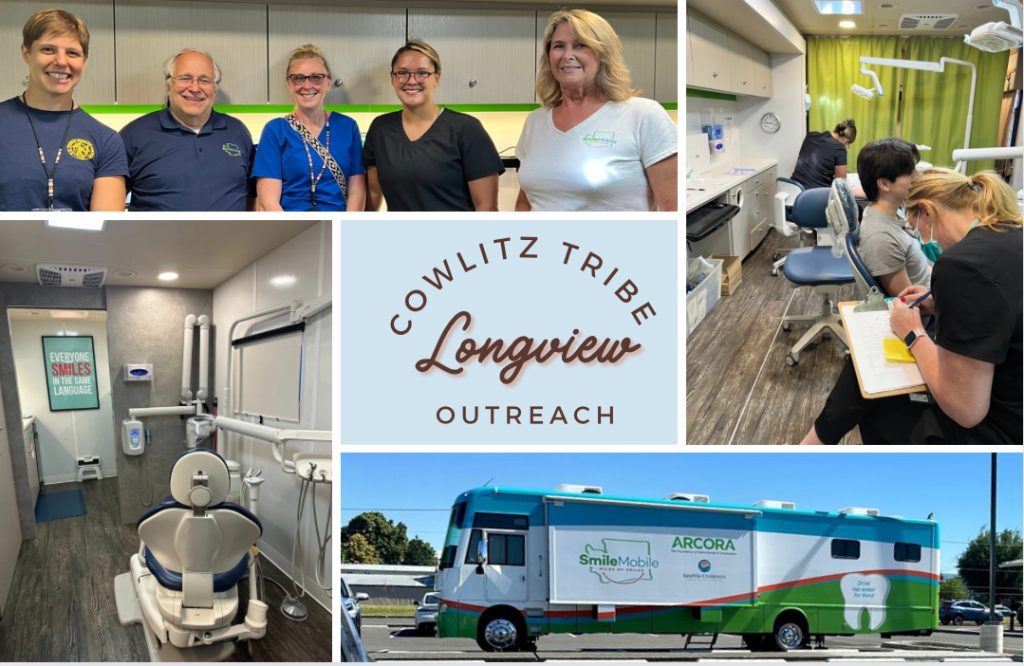
This experience highlighted the critical role of mobile dental care in reaching patients who are unable to travel for care, particularly elderly veterans in rural or underserved areas. The Smile Mobile proved to be a vital bridge to care, and integrating dental therapists into these mobile units can further expand logistical and financial access to dental services for high-risk populations.

Another memorable encounter was with a young man, aged 25-30, who had recently entered a Suboxone treatment program after struggling with drug addiction. He sought dental care for extensive caries on his anterior teeth and expressed a strong desire to “fix things” now that he was in recovery. This patient shared that he had not fully realized the extent of the dental damage caused by his past lifestyle until he had something to smile for again. His renewed commitment to his oral health reflected his broader efforts to improve his overall life.

During our consultation, I learned that the patient was eligible for up to $4,000 in dental treatment assistance through his tribe. To access this benefit, he simply needed to establish a dental home and submit his treatment needs to the tribe. This financial support was crucial in making dental care more accessible and affordable for him, especially after overcoming the significant challenges of addiction. The patient’s excitement about the resources available to him underscored the importance of community-based programs that support individuals in need. It was a powerful reminder that local health organizations and tribal resources can play a pivotal role in improving access to care for underserved populations.

This encounter emphasized the importance of understanding local healthcare resources and the role they play in addressing patients’ needs. It also highlighted the significance of patient empowerment—by being aware of and accessing available resources, patients can make informed decisions about their care and take control of their health. In this case, the patient’s ability to receive financial assistance for dental care was a key factor in helping him move forward in his recovery journey, which reinforced my commitment to advocating for access to care through mobile units and increasing the number of dental providers in underserved communities.

I also worked with patients at a local Wellness Center, particularly focusing on a young recovering addict who required full-mouth rehabilitation due to extensive caries and years of neglect. Throughout his treatment, I noticed his remarkable progress, not only in terms of dental health but also in his personal growth. Despite the challenges many patients at this facility face—such as difficulty with compliance and frequent no-shows—this patient demonstrated remarkable commitment to his treatment plan. Over the course of several appointments, I witnessed a profound cognitive and emotional shift in his attitude, as he eagerly worked to regain his smile. On my last day of rotation, I saw the patient’s joy upon viewing his new smile, thanks to the successful fitting of a removable partial denture. This experience underscored the importance of patience, empathy, and consistency in working with patients who have faced significant life challenges.

Another inspiring figure I encountered during my community rotations was Inga, a Dental Health Aide Therapist (DHAT) for Tulalip. She was deeply committed to keeping children out of general anesthesia by providing dental care in a traditional dental setting. I found it difficult to watch children undergo sedation for treatment due to their high caries risk and need for extensive restorative work. However, Inga’s approach, which focused on behavioral management and more frequent recalls, was particularly inspiring. I observed that children who received this approach were more likely to return for regular check-ups and even looked forward to their “happy visits.” This reinforced my own interest in applying behavioral management techniques and motivational interviewing to prevent the need for sedation and provide care in a less invasive, more positive setting utilizing minimally invasive dental practices.

These various encounters have had a lasting impact on my personal and professional development. They have deepened my understanding of the disparities in access to dental care and the importance of creative solutions to bridge these gaps. From mobile dental units to community-based financial assistance programs and more frequent recall visits, these experiences have reinforced the need for collaboration and a minimally invasive approach to patient care. As I continue to develop as a dental professional, I am committed to advocating for underserved populations and using the knowledge and skills I have gained to improve access to care in my future practice within my tribal community back home in Michigan.

My time working in various dental settings has been an eye-opening and rewarding experience. Through my work with high-risk communities, I have come to appreciate the role of communication, collaboration, and innovative care models in addressing their needs. These experiences have shaped my understanding of the dental profession and reinforced my commitment to promoting equitable access to dental care. Moving forward, I am eager to continue working with underserved communities, advocating for solutions such as dental therapy to aid in improving access to care and ensure that all patients can achieve optimal oral health.

My experiences showcase the need for additional resources to support community-based care such as a mobile dental units for Veterans and families unable to access traditional dental treatment models Mobile dentistry is in my future, and I am eager to be involved in the benefits and impact it can have on communities.

Support for this work was made possible by the W.K. Kellogg Foundation.
MPCA’s January 2025 Newsletter is out now!

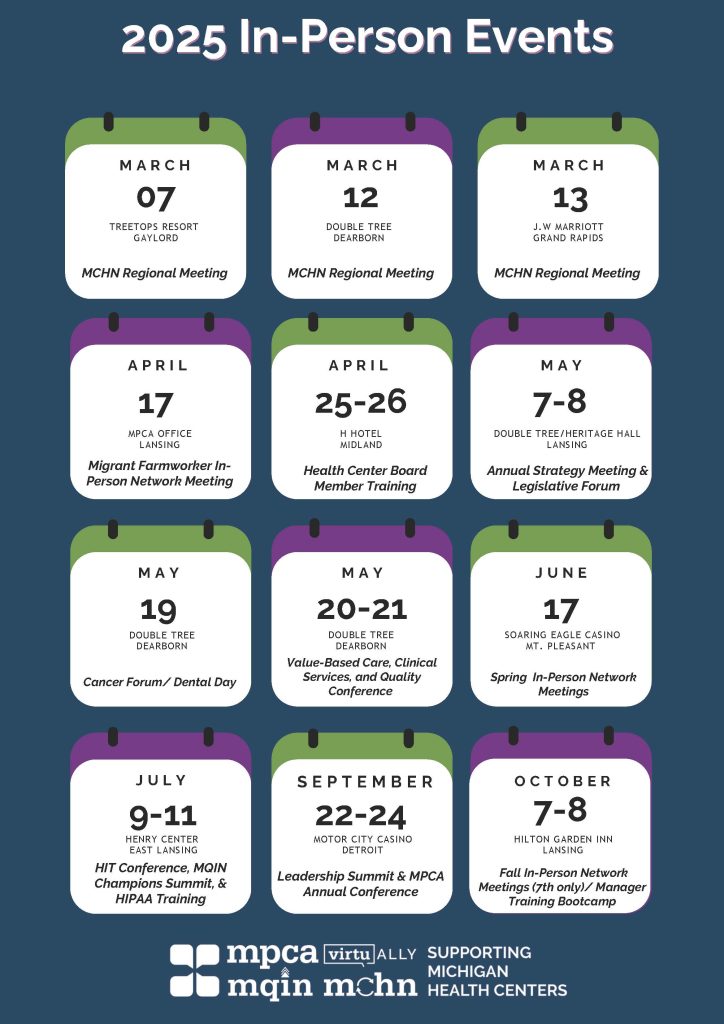
MPCA’s January 2025 Newsletter is here! In this issue we celebrate Social Determinants of Health Month, share UDS reporting resources and highlight upcoming MPCA events and learning opportunities for health center staff. Plus, we share info about our Endorsed Business Partner, Bio-MED Regulated Waste Solutions and shine our Sponsor Spotlight on MPCA Annual Conference Gold Sponsor, UnitedHealthcare Community Plan. Read the full newsletter here.


MPCA Dental Therapy Scholarship Recipient, Dana Obey recaps the 1000 Smiles Dental Project

Tell us about the time you spent in Jamaica for the 1000 Smiles dental project- why were you there and what did you learn?

Last year, Dr. Ronald Gutu taught a portion of our pharmacology requirements and shared his experiences with the Washington Oral Surgery residents whom he mentored in previous years and volunteered with 1000 smiles dental project. Dr. Gutu thought this project could benefit from our skill set and we could also gain exposure with a different cultural setting who are suffering with limited access to care. My class participated in the 2023 and 2024 dental project and each year was equally rewarding for the locals and dental professionals.

Because the project relies heavily on professional volunteers, the number and type of professionals varies each year. The first year, there were an abundance of Hygiene students including my cohort of dental therapy students. This year, there was a shortage of Dental Hygienists and fewer general dentists. Due to the shortage of providers, my cohort of dental therapy students was able to provide care when otherwise wouldn’t have been an option. Last year, I noticed many patients suffered from Heavy calculus and periodontal disease with few high caries risk patients in comparison to this year where we treated more children with fractured teeth and treated endo access restorations. The 1000 smiles program was gifted new equipment for endodontic therapy and performed endo for those in need and we were able to help with the definitive restoration and cleanings. Another invaluable experience was working with the oral surgery residents. They were enthusiastic about our skill set and helped build confidence with extractions. This is a skill that is best learned by performing the procedure vs. reading or observing about it which is why their positivity and support for our role was humbling.

Unique to Jamaica – they eat a lot of fresh fruits and proteins which may be why we see more calculus and less caries.

Many have third molars in occlusion – larger mandibles, less crowding and minimal caries.

The patient whom I treated for a cleaning, had a tooth that bothered her a few years ago and it stopped hurting. When I cleaned her teeth I found the initial cavitated lesion under layers of tenacious occlusal buccal calculus. She returned for treatment later in the week. In this case, many times treatment can’t be started until other areas are addressed first.

And you were invited to come back this year?

1000 smiles, Papa Joe and staff seem to really appreciate our skill set and welcome us back each year. I reached out to Dr. Warren and Tye Smith to advocate for my cohort as well as the 2nd year students to experience this opportunity in a different cultural setting.

I helped advocate for the continuation of dental therapy cohorts at SVC to participate in the 1000 Smiles Dental Project organized by Great Shape from October 21st to October 25th in Jamaica. I am thrilled to report that the value of integrating dental therapists within an established dental team was recognized, embraced, and appreciated. I take great pride in the work we accomplished and the positive impact we made on the lives of those we served. Dental therapists are gaining recognition, and our class, equipped with unique academic experiences, impressed fellow dental professionals with our skill set and professionalism. Each of us was eager to contribute and consistently strived to perform at the highest level of our capabilities.

How long were you in Jamacia providing dental care and what age group did you work with?

I spent two days educating over 1200 children from grades 1-6. This was by far the most rewarding experience of my life!

Cute comments from the children:

  • “Miss, your hair is GOLD!”
  • “Miss, why do you have dots on your skin? (Freckles)”
  • “Miss, I have never seen blue eyes!”

What are some cultural differences you experienced?

The children stand when a guest enters the room. They will not sit until the guest has introduced themselves and states, “Thank you, you may be seated”. The children also greet a guest in sequence, Welcome to grade 3 where excellence is achieved through hard work. (each class their own values and shared this during the class greeting). At the end of each presentation: one student would personally Thank us for the education, knowledge, and gifts we brought to their classroom. Every female is greeted as, Miss. The level of gratitude was unmeasurable!

What are some things you learned from the children?

Baking soda and salt are often used when toothpaste is not available. They add salt for a more abrasive effect. Leaf of life is often used to treat inflammation and aids in wound healing.

Side note: Google says it’s known to have antimicrobial, antiparasitic, antiulcer, anti-inflammatory and antiviral capabilities when used by a qualified herbalist.

What was your most memorable conversation?

A 6th grade boy expressed a great deal of knowledge during my oral health demonstration. I was impressed with the knowledge he shared in this short amount of time. After the demonstration, as I walked out of the classroom, he approached me one last time.

6th Grader: “Miss, I really want to thank you for taking the time to share your knowledge with us.”

Me: “Did you learn anything new?”

6th Grader (in an excited tone): “Oh yes miss. Yes, I did.”

He pulled out two small teeth from his pocket. He had saved his primary teeth that had fallen out and began explaining how he had not been taught to floss and his teeth had decay in-between them. He further explained how valuable it was to hear it from me as the information was like what he had learned on his own.

Me: “What do you want to be when you grow up?”

6th Grader: “Oh miss, I WILL be a DOCTOR. You see, my mother threw me away when I was born. But God had different plans for me. I know I will be a doctor.” (With such confidence)

Me: “I believe you will be!” (Gave him the biggest hug ever!)

Naturally, it was difficult holding back the tears, but this was truly the most memorable experience in addition to delivering an effective oral health presentation.

____

Dana is a recipient of the MPCA Dental Therapy Scholarship.

Support for this work was made possible by the W.K. Kellogg Foundation.
Michigan Primary Care Association Highlights Essential Role of Community Health Centers to Capitol Hill

The Michigan Primary Care Association (MPCA) will join the National Association of Community Health Centers (NACHC) on Capitol Hill this Wednesday, December 4th for a National Fly-In Event. MPCA and Michigan health center staff will be part of a delegation of hundreds of Community Health Center leaders traveling from around the country, in addition to thousands of health center supporters participating in a National Day of Action from their communities, to meet with policymakers from both sides of the aisle.

Read the full press release here.

National Rural Health Day 2024

Today is National Rural Health Day! This year’s theme is “Advancing Maternal Health in Rural Communities.” We wanted to recognize the MPCA member health centers that are working to improve maternal health in rural communities. We applaud the following health centers for their dedication and innovation in this important space:

Learn more about National Rural Health Day here.

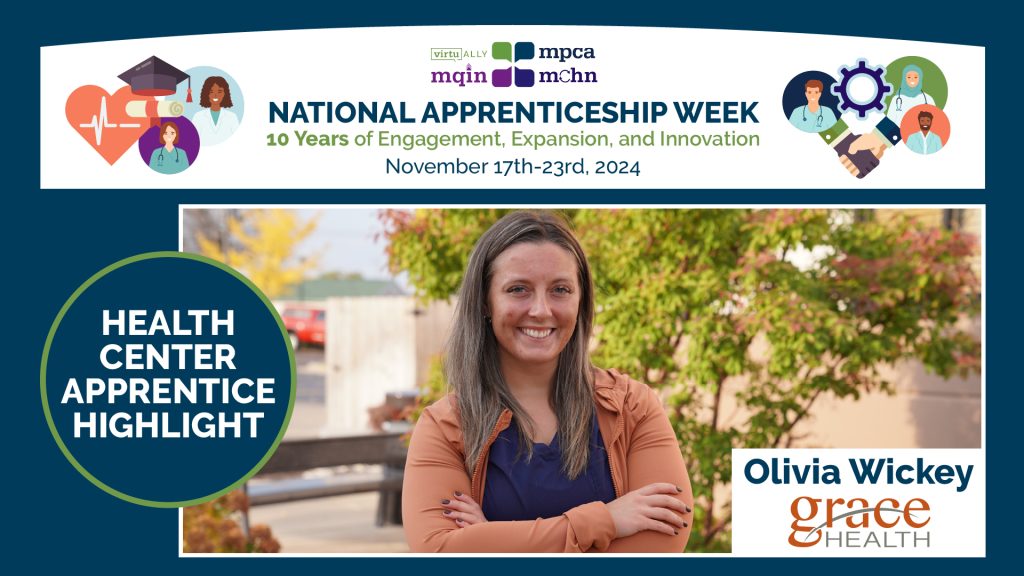
Health Center Apprentice Highlight: Olivia Wickey

In celebration of National Apprenticeship Week we are highlighting some of the apprentices working and learning in Michigan health centers. Olivia Wickey, CCMA has completed Grace Health’s MA Apprenticeship Program.

  1. Why did you decide to become an apprentice at a Michigan health center?
    If I’m being completely honest, an apprenticeship was never something that I had planned to do. I came from working in the RV factory and after 3 years of doing that I was tired of just being a number and doing brainless work. I have always enjoyed helping others and doing hands on work. When the opportunity presented itself to not only help others in need but also have a hands-on job, it was a no brainer for me.
  2. What has been your favorite experience working as an apprentice?
    My favorite part of being an apprentice is a hard one to narrow down. I think the thing I am most grateful for was the part that I was able to do the schooling and training and be paid to learn rather than choose to go to school or pay the bills. I am forever grateful for a program that allowed me to learn and make money at the same time.
  3. How will being an apprentice support your future career goals?
    I personally think that no matter how you look at it, there are always things to learn and ways to improve in our careers. I appreciate the fact that we always have new and improving things going on to teach us how to be better for not only us as an organization but for our patients. My biggest goal is to be the best I can be at my job and to be able to always offer a helping hand to those in need.

Learn more about National Apprenticeship Week here.

Health Center Apprentice Highlight: Imani Henry

In celebration of National Apprenticeship Week we are highlighting some of the apprentices working and learning in Michigan health centers. Imani Henry, MA is currently in Grace Health’s MA Apprenticeship Program.

  1. Why did you decide to become an apprentice at a Michigan health center?

    I’ve grown up in this city and state so it’s more personal to me to try and help make a difference in my own community, I love to help people and try to make a difference in their day so being able to do that in my own community is amazing.
  2. What has been your favorite experience working as an apprentice?

    Besides the fact that I’m just so excited to be working and learning at the same time I’m loving the relationships that I’m building with everyone, everyone has been so excited for us that it makes it even more exciting to continue this career journey with so many people cheering us on.
  3. How will being an apprentice support your future career goals?

    I’ve always known I wanted to work in health care because of how much I value relationships with people so when I was presented with the chance to jump start my career and focus on my MA certification while working hands on I knew this was the perfect opportunity for me.

Learn more about National Apprenticeship Week here.

MPCA November Newsletter is out now!

MPCA’s November Newsletter is out now! This issue includes info about National Apprenticeship Week, advocacy and Quorum updates, free family planning supply opportunities and the migration of the Michigan Health Alert Network. We highlight learning and funding opportunities and upcoming events. Finally, we provide info on how our Endorsed Business Partner, Managed Care Advisory Group can help health centers recover their share of $10 billion in settlements and shine our Sponsor Spotlight on NextGen Healthcare.

Read the full Newsletter here.

Sign up for the Newsletter here.